A closer look at durability, UV resistance, maintenance, and protection reveals which flooring option offers the best long-term value.

The Colorado sun is beautiful year-round, but its intense UV exposure and dramatic temperature swings can be surprisingly harsh on garage flooring materials.
Summer brings more than backyard barbecues and road trips—it also brings extreme heat, UV exposure, hot tires, and rapid temperature fluctuations that can test even the toughest garage flooring systems. If you're considering upgrading your garage floor, you'll likely encounter three common options: epoxy coatings, polyaspartic coatings, and concrete staining. While each offers benefits, not all perform equally when temperatures climb.
Let's break down how each option handles heat, wear, and everyday use so you can make the best choice for your garage.
Polyaspartic vs. Epoxy: The Summer Heat Showdown
For years, epoxy was considered the standard for garage floor coatings. While it can improve the appearance of a garage, advances in flooring technology have introduced hybrid flooring systems that combine an epoxy base coat with a polyaspartic top coat. This approach takes advantage of epoxy's strong bond to concrete while adding the UV stability, durability, and fast cure times of polyaspartic technology.
It's important to note that not all garage floor systems are built the same. Many contractors install epoxy-only coating systems, where epoxy serves as both the base coat and the final wear surface. At Custom Garage Solutions, we use an industrial-grade epoxy base coat for exceptional adhesion to the concrete, then apply a UV-stable polyaspartic top coat for long-term durability, stain resistance, and protection against hot-tire pickup and Colorado's intense sun exposure.
UV Resistance
One of the biggest drawbacks of epoxy-only flooring systems is their susceptibility to UV damage. Over time, direct sunlight can cause epoxy floors to yellow, fade, and lose their original finish. This is particularly noticeable in garages with windows or doors that are frequently left open during the summer. Polyaspartic coatings are UV stable, meaning they maintain their color and appearance year after year without yellowing.
Resistance to Hot-Tire Pickup
During summer, vehicle tires can become extremely hot after driving. As those tires cool in the garage, they can pull on the coating beneath them. This phenomenon, known as hot-tire pickup, is one of the most common reasons epoxy-only garage floor coatings begin peeling or failing over time. Polyaspartic coatings form a stronger bond with the concrete and are specifically designed to resist hot-tire damage.
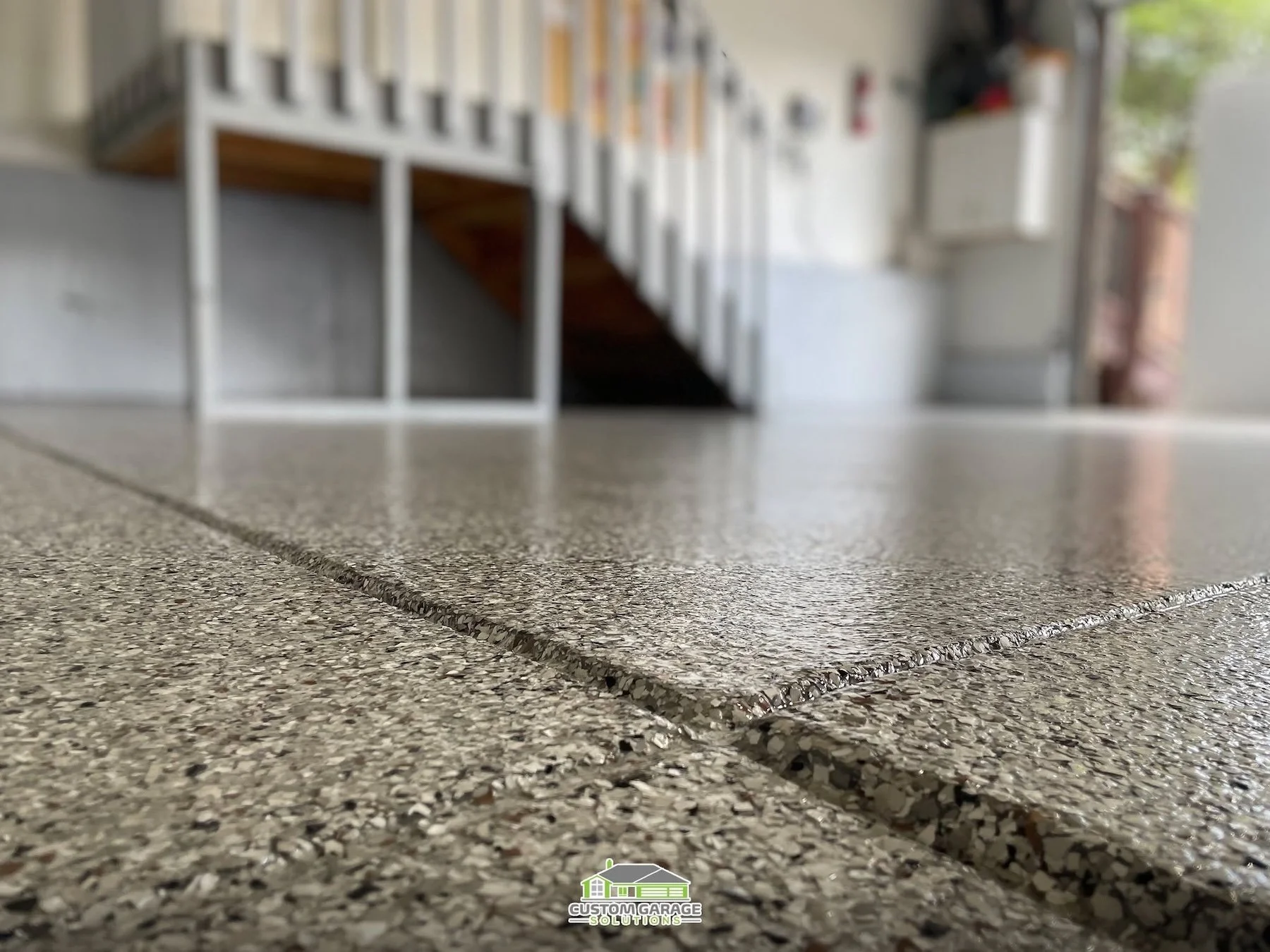
Polyaspartic and epoxy both improve appearance, but polyaspartic's resistance to stains, moisture, and wear makes it the easier floor to maintain.
Durability During Temperature Changes
Colorado weather is known for dramatic temperature swings. A garage floor coating needs to handle expansion and contraction without cracking or separating from the concrete. Because epoxy is more rigid, it can become vulnerable to cracking, chipping, and peeling over time. Polyaspartic coatings offer greater flexibility, allowing them to move with the concrete while maintaining their integrity.
Faster Installation and Return to Use
Nobody wants their garage out of commission for a week. Many epoxy systems require multiple days for installation and several additional days to fully cure before vehicles can be parked on the surface. Polyaspartic systems can often be installed in a few days and cure much faster, allowing homeowners to get back to using their garage sooner.
Maintenance and Appearance
Both epoxy and polyaspartic coatings create a clean, finished appearance. However, polyaspartic floors are highly resistant to chemicals, moisture, stains, and everyday wear, making them easier to maintain over the long term. Decorative flake systems also help camouflage dirt and minor debris between cleanings.

From hot tires to Colorado summers, polyaspartic flooring is engineered to deliver lasting beauty, durability, and protection.
While epoxy and polyaspartic are both coating systems, some homeowners prefer concrete staining as a decorative flooring option.
What About Concrete Staining?
For homeowners looking for a more natural concrete appearance, concrete staining can be an attractive alternative.
Rather than creating a protective coating over the surface, concrete stains penetrate the concrete itself, enhancing its color and character while showcasing the unique variations within the slab.
Concrete staining is often chosen for:
Homeowners who prefer a decorative, natural concrete look
Workshops or hobby spaces
Patios and outdoor living areas
Garages with lighter vehicle traffic
Budget-conscious flooring upgrades
Stained concrete can improve aesthetics and reduce the appearance of plain gray concrete, but it doesn't provide the same level of protection as a professionally installed polyaspartic floor system.

Stained concrete offers a decorative, natural finish for patios and low-traffic garages but doesn't provide the same level of protection against moisture and stains as a polyaspartic floor system.
Summer Performance: Stained Concrete vs. Polyaspartic
While stained concrete handles UV exposure well because the color is embedded into the surface, it lacks the protective benefits of a coating system.
Compared to polyaspartic flooring, stained concrete is generally:
More susceptible to oil and chemical staining
Less resistant to abrasion and impact
More likely to require periodic resealing
Less effective at concealing existing surface imperfections
Less protective against moisture intrusion
Polyaspartic coatings create a durable barrier that helps protect the concrete beneath from road salts, oil leaks, moisture, and everyday wear. They also allow damaged concrete to be repaired and resurfaced before installation, creating a cleaner and more uniform finish.
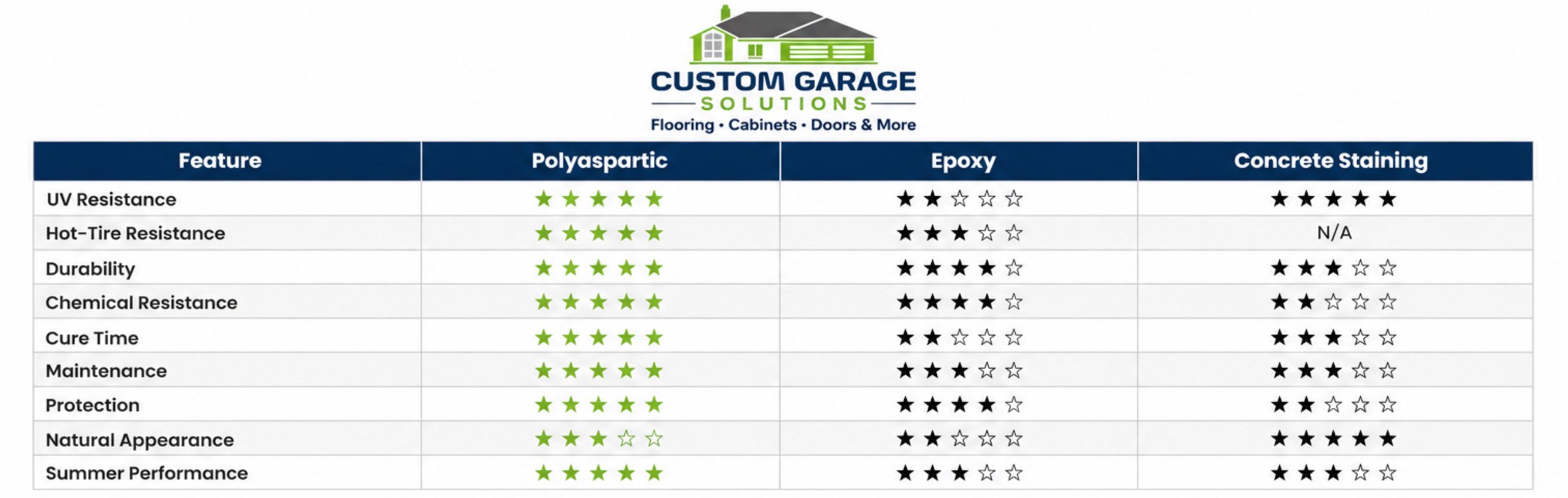
Bottom Line: For long-term performance and protection, polyaspartic comes out on top. Concrete staining remains a popular choice for its decorative, natural finish.
When comparing polyaspartic vs. epoxy garage floor coatings, the biggest differences come down to UV stability, hot-tire resistance, durability, and long-term maintenance. These factors become especially important in Colorado's climate, where floors are exposed to both intense summer sun and dramatic seasonal temperature changes.
Which Garage Flooring Option Performs Best in Summer?
If your primary goal is long-term durability, protection, and performance in Colorado's challenging climate, polyaspartic flooring is the clear winner.
While epoxy can improve the appearance of a garage floor, it struggles with UV exposure, hot-tire pickup, and temperature fluctuations over time. Concrete staining offers a unique decorative finish but doesn't provide the same level of protection against daily wear and tear.
For homeowners who want a garage floor that resists summer heat, maintains its appearance, and stands up to years of vehicle traffic, moisture, and seasonal changes, a professionally installed polyaspartic floor system delivers the strongest combination of durability, performance, and value.
At Custom Garage Solutions, every flooring project begins with professional surface preparation, crack repair, and expert installation. Our floor systems utilize an industrial-grade epoxy base coat for exceptional adhesion to the concrete, followed by a UV-stable polyaspartic top coat that provides long-term durability, stain resistance, and protection against Colorado's harsh climate.
F.A.Q.
Does polyaspartic flooring yellow in the sun?
No. Polyaspartic coatings are UV stable and resist yellowing, making them ideal for garages with windows or doors that receive direct sunlight.
Is polyaspartic better than epoxy for garage floors?
In most cases, yes. Polyaspartic flooring offers better UV resistance, hot-tire protection, flexibility, and faster cure times than traditional epoxy coatings. See more benefits of polyaspartic vs. epoxy.
Does Custom Garage Solutions use epoxy or polyaspartic coatings?
We use both. Our flooring systems are built with an industrial-grade epoxy base coat that bonds tightly to the concrete, followed by a polyaspartic top coat that provides UV resistance, durability, stain protection, and long-term performance. This combination allows us to leverage the strengths of both materials for a superior garage floor system.
How long does a polyaspartic garage floor last?
A professionally installed polyaspartic floor can last for many years with proper maintenance while maintaining its appearance and performance.
Is stained concrete a good option for garages?
Stained concrete can provide an attractive decorative finish, but it does not offer the same level of protection against stains, moisture, and wear as a polyaspartic coating system.
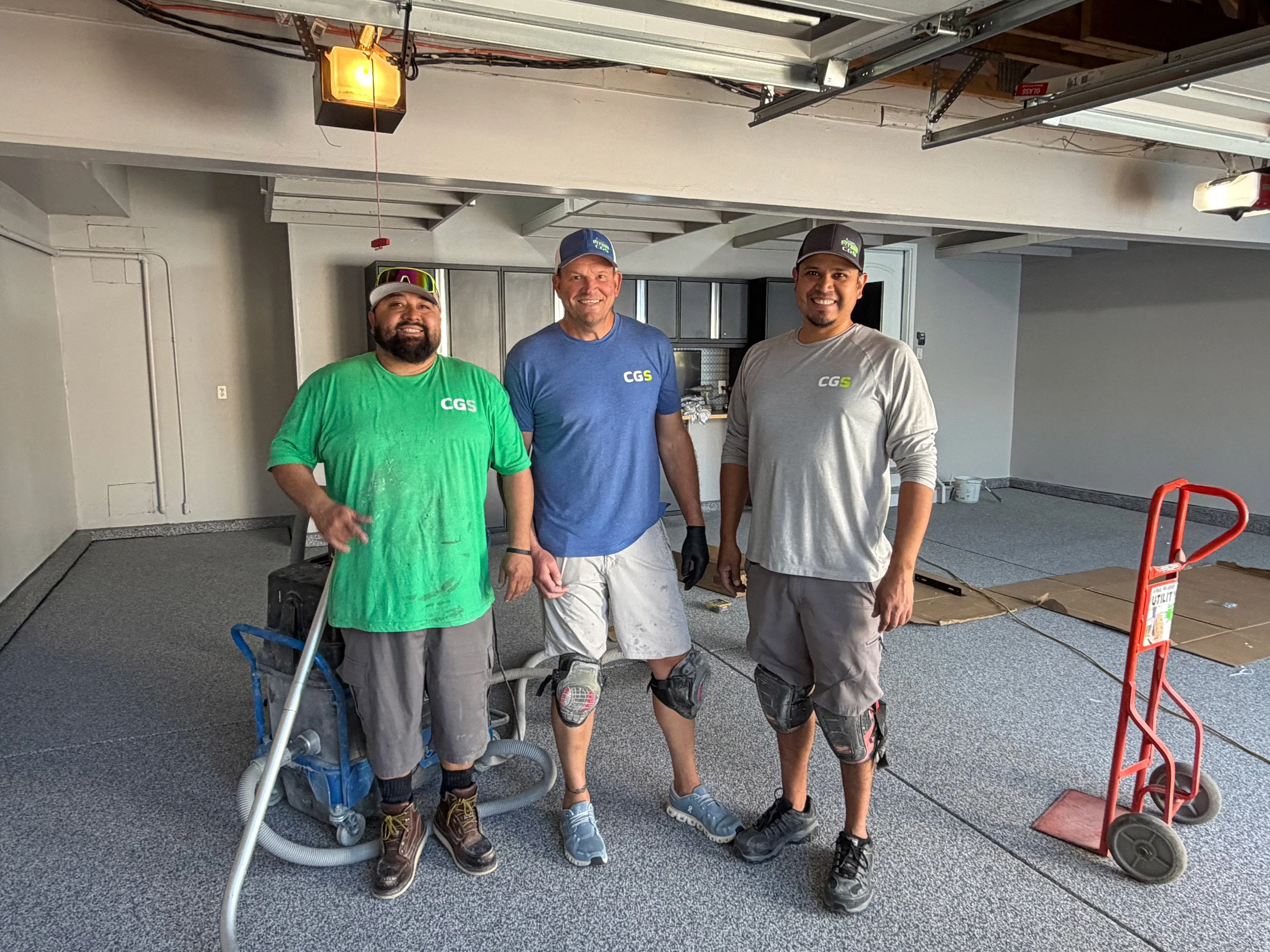
Ready to transform your garage this summer? Custom Garage Solutions delivers a stress-free, tailored experience that transforms your home into something extraordinary.
Request a free estimate here for your garage upgrade or custom garage flooring project.
We proudly serve homeowners throughout Denver, Highlands Ranch, Littleton, Parker, Castle Rock, and the greater Denver metro area.
More from Custom Garage Solutions:
How an Organized Garage Helps You Enjoy More of Colorado Summer
Concrete Staining That Elevates Colorado Homes with Lasting Beauty and Performance
6 Garage Organization Tips for Colorado Families During Spring Sports Season
From the Ground Up: The Role Garage Flooring Plays in a Successful Remodel
The Weekend Reset: How an Organized Garage Makes Monday Easier
Denver’s Hottest Garage Upgrades for 2026: Smarter, Sleeker, More Functional
Turning Garage Potential into Reality: See the Before & After of this Colorado Garage
Best Garage Upgrades for Cyclists in Colorado + Top South Metro Denver Trails
The Retiree’s Guide to a Garage Update: Easy Living, Custom Designs & a Clutter-Free Space
Our Garage Remodel Experience: What to Expect Every Step of the Way
Garage Goals Achieved: 7 Incredible Transformations Across Colorado
See a Colorado Garage's 14-Day Transformation From Cluttered to Custom
Perfecting Your Garage’s Look: How to Select a Color Palette
Unlocking Hidden Potential: How Garages Can Increase Your Home's Value
Snow? Mud? Sludge? See How Easy These Garage Floors Come Clean

Our Garage Services
We offer custom garage services throughout the Denver area including flooring, door repair and replacement, cabinets and shelving and custom upgrades.